Biography/WhoISWho
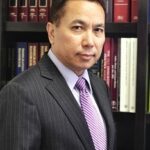
Ramesh K. Shrestha: Reputed Attorney and Counselor-at-Law from New York City.
A well-reputed Attorney and Counselor-at-Law, Ramesh K. Shrestha was born in Panchthar District, Nepal, and raised in Dharan until the completion of S.L.C. The owner and Principal Attorney of Shrestha Law Firm, PLLC, in downtown Manhattan, New York City, NY, had a fantastic childhood, as his family considers education to be the prime mantra to succeed in life. He earned his S.L.C. in the late 70s from the British Army School, Dharan, a Bachelor of Law (LL.B.) from Nepal Law Campus in the 80s, and a Master’s degree in Political Science from Tribhuvan University. He is a member of the bar of Nepal. He completed a summer program in American Legal System at International Law Center, Georgetown University, Washington, DC, in 1993. Earned Master’s in Law (LL.M.) from Saint Louis University, School of Law (SLU) in St. Louis, in 1994.
Upon graduation from Law School, he worked for the prestigious corporate law firm, Suelthaus & Kaplan, in St. Louis, as an intern in 1994/95. Prior to establishing his own law firm, Shrestha Law Firm, PLLC, in 2000, he worked at Chhetry & Associates, PC, as an attorney-at-law. He was admitted to the Bar of the State of New York in 1996 and has been a member of the bar with good standing. He is a member of the American Immigration Lawyers Association (AILA), American Bar Association (ABA), and the State Bar of New York. He has been admitted to practice before The Federal Courts of Southern and Eastern District of New York, the United States Court of Appeals for the Second Circuit, the United States Court of Appeals for the Third Circuit, the United Court of Appeals for the Fourth Circuit, the United States Court of Appeals for the Ninth Circuit, the United Court of Appeals for the Tenth Circuit, and United States Court of Appeals for the Eleventh Circuit.
Mr. Shrestha has been practicing Federal Immigration and Nationality Law of the United States extensively as an Attorney-at-Law for more than 22 years. He represents a variety of U.S. and International corporations, small businesses, technology firms, and individual clients. Attorney Shrestha has successfully represented corporate and individual clients in diverse areas such as employment and business/investor, permanent labor certification, priority workers, family petitions, citizenship, removal/deportation defense, asylum, waivers, and federal court litigation. Representing individuals in business and family immigration, consular processing, removal defense, and asylum matters has been a professional passion.
He has been strikingly successful in US Federal Courts in overturning unfavorable decisions of the Department of Homeland Security and Board of Immigration Appeals (BIA). He has argued before the US Court of Appeals for Ninth Circuit and the US Court of Appeals for the Second Circuit.
Mr. Shrestha has been selected as one of the “10 Best Immigration Attorneys” for 2017 in the State of New York by the American Institute of Legal Counsel. Mr. Shrestha has also been consecutively enlisted, among the top 100 Immigration Attorneys in the State of New York from; 2016, 2017, 2018, and 2019, by The American Society of Legal Advocates, a national legal advocacy organization.
Over the years, as a community lawyer, Mr. Shrestha has remained a legal advisor for many community not-for-profit organizations, including the Federation of Indigenous Peoples of America (FIPNA), and the United Sherpa Association (Sherpa Kyidug) in New York City. Mr. Shrestha worked as Board Member for NRN NCC for 2011/2012. Mr. Shrestha also led a by-laws amendment committee for the NRN NCC. He created an idea of making it a member-based organization, where the NRN members could directly cast a vote for the Executive Committee instead of the members of the House of Delegates.
Mr. Shrestha has significantly contributed to the Nepali Community living in the USA. He frequently published articles in many newspapers, beyond which his other contributions include: exclusively writing a weekly legal column, Wakil Sanga Kanun Ka Kura (Legal Matters With Attorney), in Vishwa Sandesh, Nepali Newspaper published in New York City, and live online lectures and presentations on US Immigration and Nationality Law, via Khasokhas News Media, and other online media in New York City.

Bala Ghimire: Service from the Heart, Enterprenuer from Chicago.
How easy would everyone’s lives be if they knew how they wanted to change the world as a child? While discovering the love of their life in their early years isn’t a cup of tea for many of us, Bala Ghimire was enthusiastic about a political reformation in Nepal since he joined a student union on campus. Born and raised in Arghakhanchi, in a middle-class family earning their livelihood through farming, Ghimire went to Delhi University and Asmania University for a master’s in political science after receiving his School Leaving Certificate in 1983.
As he was highly patriotic, he packed his bags and started his journey of political improvement in Nepal after completing his education.
He decided to move to the United States in 1996 and has contributed to society as an active social servant and a dexterous business person. The terrifying days of struggle right after moving to the States left him with memories of home and made him more determined to start his own restaurant named Curry Hot in 2005 in Chicago. As the business grew exponentially, he knew it was an excellent platform for promoting Nepal, and he started another restaurant in 2007. Since 90 percent of his clients were American in a chain restaurant named Nepal House in 2012, the government of Nepal honored him by nominating him as a Tourism Representative in 2016.
Ghimire has been involved in social service since 2005. He was appointed as the advisor of the Chicago Mayor’s Office in 2008. There he was responsible for assisting Richard Daily, the most powerful mayor in the US. Then, in 2010, Cook County recognized him as Entrepreneur of the Year. His vision of promoting Nepal reached a new height when he was appointed as the advisor to the secretary of state of Illinois in 2011. Additionally, Ghimire served as the president of the Association of Nepali in Midwest America in 2016; received the Presidential Volunteer Award from the US president in 2012 for his outstanding contributions to the society; and has been honored by many Nepali organizations in acknowledgment of his social dedication.
Ghimire believes that the United States is a land of opportunity where hard work, honesty, empathy, and persistence guide you to success. As a resident of Chicago, Ghimire continues to light the candles of hope and empathy with his wife and two daughters there.

Dr. Jeet Joshee: Dean of CAL State University, College of Professional and International Education, CA.
Dr. Jeet Joshee is Associate Vice President for International Education and Global Engagement and Dean of the College of Professional and International Education at California State University, Long Beach (CSULB). As Associate Vice President, Dr. Joshee is the Chief International Officer of the University. In this role, he advises the President and Provost on all matters related to international education and advances the university’s global mission by establishing strategic international partnerships and creating engagement opportunities for students, faculty, and staff. He oversees the strategic plan for international education and works to enhance the internationalization goals of the campus. He works closely with the administration, faculty, staff, and students on all matters related to international programs at CSULB. Similarly, he works with Presidents, Senior Administrators, faculty, and foreign government officials in many countries around the world to advance the internationalization strategies of Cal State Long Beach.
As the Dean of the College, he is responsible for CCPE’s self-support graduate and undergraduate degrees, professional certificate programs, online programs, the American Language Institute, the Center for International Trade and Transportation, Advanced Media Production Center, the Confucius Institute and International Training Programs, Summer Session, Winter Session, and Open University programs. As the Dean of the major outreach division of the university, Dr. Joshee works with business, industry, and the Long Beach community. Dr. Joshee also holds the rank of Professor in the CSULB College of Education.
Before moving to Cal State Long Beach, he was Dean of the College of Extended Learning at Cal State San Bernardino. He significantly expanded international management training and ESL programs during his tenure there and established a China and Korea Programs Office. In 2007, Dr. Joshee chaired the Comprehensive Economic Development Strategy (CEDS) committee for the County of San Bernardino’s Economic Development Agency and served on the Board of Advisors in the San Bernardino County’s International Trade Advisory Council.
Previously, Dr. Joshee was Assistant Dean and Associate Professor in the College of Continuing Studies at the University of Connecticut. He oversaw the College’s academic affairs, chaired the faculty committee, and supervised the operations of Summer Sessions, Intersessions, International Programs, and Special Sessions credit programs.
Dr. Joshee’s teaching and research areas include international development education and culture studies. At the University of Connecticut, he developed several intensive, short-term international culture study programs and led student groups in Cuba, Thailand, and Nepal as a faculty member. He firmly believes that courses dealing with global education and cultural understanding should be part of the core curriculum in American higher education and that it should be required for every student we graduate.
Dr. Joshee has also held a position at the University of Massachusetts Amherst as head of the Division of Continuing Education credit program. He received his Doctoral and Master’s degrees in International Education at UMass. Additionally, he has a Masters’s degree from the School for International Training in Vermont. His previous experience includes working with educators from many foreign countries, with the US Peace Corps, as a consultant to the World Bank, and with several USAID projects.
Professionally, Dr. Joshee is an active member of several professional associations, including the Association of International Education Administrators (AIEA), the European Association of International Education (EAIE), the Asia-Pacific Association of International Education (APAIE), the Association of International Educators- NAFSA, University Professional and Continuing Education Association (UPCEA) and American International Recruitment Council (AIRC). He serves on the AIEA and AIRC board of directors.
Recent years, Dr. Joshee took the role of President of AIRC in 2018. He was elected President-elect of AIRC in 2016 and served on its board, and Chaired the 2017 Annual Conference Committee. AIRC is a standards development organization and a leader in international student recruitment consisting of over 400 member institutions from the USA and worldwide. In the past, he has Chaired AIRC’s Certification Commission.
Previously, he has served on UPCEA’s Board of Directors and chaired its Opportunities and Equity Committee. He was also the Chair of the Global Associates Knowledge Network, UPCEA’s international arm, and a Commissioner of UPCEA’s International Commission. He has also held positions in the North American Association of Summer Sessions (NAASS) and the Association of University Summer Sessions (AUSS).
Dr. Joshee resides in Whittier Hills, California and is married to Subarna Joshee. They have two professionally successful adult children, Nisha and Abiral, and four grandsons.

Khagendra Chhetry: The Super Lawyer from New York.
When great men and women embark on the pursuit of education, they usually leave a mark on the world. Khagendra Chhetry, the first Nepali admitted to practice before the Supreme Court of the United States, is one of those great men who has used every opportunity to learn and impart his knowledge for a better society.
Mr. Chhetry was a wanderer since an early age. He received his high school degree from Devchuli Ma. Bi, Nawalparasi, Nepal, and LL.B from the Tribhuvan University, Institute of Law, Kathmandu. He was admitted to practice before the Supreme Court of Nepal on March 7, 1981. After studying for an M.C.L at Delhi University, India, he taught law at Nepal Law Campus, Tribhuvan University. After moving to New York, he received a Juris Doctor from the Fordham University School of Law. When in Fordham, he was an active member of Fordham Entertainment, Media & Intellectual Property and earned the Fordham Public Interest Law Award. He was the finalist of Murase & White Fellowships and the I. Maurice Wormer Moot Court Competition. In 1986, he received LL.M. from the Columbia University School of Law in New York, NY.
Moreover, he was also involved with the Academy of International and Comparative Law, the Southwestern Legal Foundation, and the University of Texas at Dallas. In 1990, Khagendra Represented Nepal at the Constitution Recommendations Commission of Nepal to the United States. He organized the New Constitution of Nepal Conference at Columbia Law School, New York, on July 27-28, 1990, with the participation of many U.S. law experts and professors.
In December 1987, Khagendra became the first Nepali to become a member of an American Bar when he was admitted to practice law in the State of New York. Ever since August of 1994, he became the President and Managing Partner of Cherty & Associates, P.C., New York, known as one of the most successful law firms in the States. He is involved in the general practice of law, including all aspects of immigration and nationality law and trial work, real-estate closing, civil litigation, landlord-tenant, representing small and medium size corporations and individual clients, handling federal appeals with successful reported cases, criminal, business closing and bankruptcy, matrimonial and personal injury cases, representing clients with a proven track record of over 20 years.
From 1991-1993, Khagendra Reviewed and wrote decisions on appeals taken from Administrative Law Judges’ decisions and advised Commissioners on civil rights law and other legal matters of the New York City Commission on Human Rights as an Assistant General Counsel. Khagendra is a Board Member of the America Nepal Medical Foundation. He was the Past President Alliance for Democracy and Human Rights in Nepal. He has been the Co-chair of the task force on the Continuation of Nepal Citizenship for NRNs and ICC Members from 2015 until now. He has been an Honorary NRN Advisor of the Government of Nepal, Ministry of Foreign Affairs, from 2016 until now.
Khagendra is as excellent in living a peaceful life as Nepali, Hindi, Urdu, and English. He is married to Dr. Rekha Hamal Chetry and is gifted with a wonderful son, Nevin Chetry.

Dr. Gokarna Gharti-Chhetri: an Outstanding scholar from West Palm Beach
A native of Ribdikot Rural Municipality of Palpa, Nepal, lives in Palm Beach, Florida.
He received a Bachelor of Science in Agriculture from MPUAT, Udaipur, India, and a Master of Science in Agronomy and Management from the University of Philippines at Los Banos, Philippines. He obtained a second Master of Science and Ph. D. in Plant Biotechnology from Vrije Universitet Brussels, Belgium.
He has expertise in biofuel production, molecular and cell biology techniques, Scanning Electron Microscopy, Wheat Breeding, Grain Storage, and Post-harvest Technology.
He started his career in plant quarantine at the Department of Agriculture, Nepal. He worked as an agronomist, training, and research outreach officer for about seven years. He taught Plant Breeding and Genetics courses as an Associate Professor at The University of Agriculture and Forestry (UAF), Nepal, for about four years. He also coordinated the Agriculture Biotechnology Research Group at the UAF. He served as an Executive Vice Chairman at the Council for Technical and Vocational Education (CTEVT) in Nepal, which oversees planning, policy formulation, standardization, monitoring, and evaluation of the production of skilled manpower in the Government of Nepal.
In 1997, he moved to the University of Florida (UF), the USA, as a Fulbright Scholar. At UF, he studied the replication of the citrus Tristeza virus, contributed to Florida Citrus Budwood Certification Program, and established a micro shoot-tip grafting scheme for virus and virus-like disease elimination.
Then, he moved to the University of Gothenburg, Sweden as a Senior Scientist. For ten years, he worked in cell and tissue culture, the transformation of oat crops, and coordinated international research and educational projects – development of rice biotechnology in Nepal; phytoremediation of Arsenic in South Asian countries, namely Nepal, India and Bangladesh and the development of a plant-made, subunit vaccine against genital herpes infection for Egypt. He transferred my Patent and became a co-founder of a biotech company named CropTailor AB in Sweden (2007-2015). He filed a Patent in Sweden in 2007 entitled Novel transformation method and transformed plants.
He has published numerous (ca.18) scientific articles in international journals and made presentations at international conferences. He co-authored two books, A Laboratory Guide for Cellular & Molecular Plant Biology, Birkhauser Verlag/AG, Basel/Switzerland, and Molecular Biology, Biotechnology & Environment. IUCN/NEMBIS, Kathmandu, Nepal. He has prepared four Agricultural Biotechnology-related consultancy reports for Nepal.
In 2009, I moved to the USA. I have taught general biology, microbiology, environmental science, and biofuels as a Professor of Biological Sciences at Palm Beach State College in Florida, USA. At the STEM Conference held in Orlando, FL (2010), he delivered a lecture entitled “Making Impacts With Biotechnology Education”. He made a presentation on “Skill Generation for Poverty Alleviation” at the 12th Senior Administrator’s Conference, organized by Colombo Plan Staff College for Technical Education, Manila, Philippines (1995).
Besides teaching, he is also involved in community activities. He is a member of the Greater Lantana Educational Board of the City of Lantana, Florida. He chairs the Architectural Review Board of the Town of South Palm Beach, Florida. He is a member of the Florida Association of Community Colleges and the American Society of Plant Biologists and a founder and president of the Nepal Molecular Biology Society, Nepal. He is also a certified Yoga Instructor in the U. S. He serves as an Asta-Ja International Coordination Council (Asta-Ja ICC) Advisor.
He was awarded the 2019 NISOD Excellence Award for Teaching and Learning at the International Conference on Teaching and Leadership Excellence in Austin, Texas, USA. He plans to continue with his teaching job. He would like to write his memoirs. He looks forward to sharing his knowledge, expertise, and experiences for the betterment of Nepal. He believes honesty, hard work, commitment, and dedication are the key to success in life.

Bashu D. Phulara, Esq: A Tireless Attorney in The Times Square
Bashu D. Phulara, Esq. is a young, enthusiastic business immigration attorney from the bustling Times Square, New York City. Mr. Phulara believes his life turned around when he started to desire and dream.
Born and raised in a middle-class family in the far western region of Nepal, Mr. Phulara was never a planner. He rarely thought about how he would solve all the adversities in his life. However, he was always dedicated to his education and personal growth. After completing his elementary education at Chudi, a local village, Mr. Phulara completed his high school (SLC) in Mudhbhara, Doti, Nepal in 1992. He was a class topper from grade one to ten. As a college topper, Mr. Phulara graduated intermediate in Law (I.L.) from Doti Multiple Campus in 1994.
In 1995, Mr. Phulara moved to Kathmandu to pursue his Bachelor’s degree in Law (B.L). He graduated B.L in 1998 as one of the top two Nepal students from the Nepal Law Campus in Nepal. As a bright student, he received his Master of Laws (LL.M.) degree in 2001 from Tribhuvan University, Nepal as the top performer, breaking Nepal’s record of the previous best performers at the LLM program in Tribhuvan University. His performance and academic accomplishment were nationally recognized by the University, which eventually helped him to receive a gold medal and “Mahendra Vidya Bhushan Kha” from Nepal Government, the highest honor given to distinguished students and scholars. Through the U.S. Nepal student exchange program, Mr. Phulara received an opportunity to attend Washington University, St. Louis, in 2001. Before moving to NYC, he was admitted as a practicing lawyer in Nepal in 2003. As a registered lawyer in Nepal since 2003, he did some legal research and handled different legal matters. In 2005, Mr. Phulara moved to NYC to pursue a Master of Laws (LL.M.) in American Studies at Benjamin Cardozo School of Law (Yeshiva University). While attending LL.M. (2006-2008) at Cardozo Law, he was granted the Dean’s Merit Scholarship. After admission into the NY bar as an attorney-at-law in 2011, Mr. Phulara worked as an associate attorney in a prestigious NY-based law firm from 2012 to 2017. As an attorney, he handled complex legal matters in NY, including business immigration, family, civil litigation, corporate, criminal cases, bankruptcy, and others. Over the years, he traveled to over 30 States and successfully defended his clients on asylum and removal hearings before immigration courts throughout the United States.
In addition, Mr. Phulara has successfully defended hundreds of individual and corporate clients in Business Immigration. Even though he is currently a registered attorney in New York (2011), his career started as a registered lawyer in Nepal (2003). Also, he was a Professor of Contract and Business Law (2002-2004) at the Apex College and College of Applied Business (CAB) in Nepal. He was the legal advisor for corporate governance in Nepal from 2001 to 2002. From 2005-2008, he was a foreign law associate at a New York-based Law Firm. With experience and exposure on the international level, Mr. Phulara founded Law Office named Bashu D. Phulara, P.C. at Times Square in 2017. As such, he is the first known Nepali lawyer to have a law firm in the heart of awe-inspiring Times Square. His work and interviews as an attorney is well covered and featured in significant print and electronic media, including Kantipur, Annapurna Media, AP-1 HD, Nepal Television, Radio Nepal, and Rising Nepal, among other media in Nepal and the United States. Most recently, in 2019, he was honored with a well-known “Sikhar International Distinguished Personality Award” in Nepal, recognized and bestowed upon him by the Vice President of the Government of Nepal.
Mr. Phulara has published dozens of articles on financial sector development and contributed extensively to research in corporate laws, including patent rights in Nepal from 1994 – 2006. Even though moving from Nepal to the U.S was difficult for Mr. Phulara, his hard work and persistence have allowed him to live the life he has always wanted. Mr. Phulara strongly believes that success doesn’t follow us until we follow it. Therefore, though the fear of failure haunted Mr. Phulara throughout his life, he always fought it with courage and self-belief. Currently, a member of the American Immigration Lawyers Association and New York Bar Association, Mr. Phulara aims to become a nationally acclaimed business immigration attorney in the United States. With the effort Mr. Phulara puts into anything, he is bound to achieve his dreams.

Dr. Upendra M. Sainju: Researcher and Senior Soil Scientist from Montana.
Dr. Upendra M. Sainju has worked as a Research Soil Scientist in dry land and irrigated cropping systems for the past 14 years in the United States Department of Agriculture, ARS, Northern Plains Agriculture Research Library, Sidney, Montana. Before this, he worked in postdoctoral positions and as visiting scientist at Rutgers University, Washington State University, Fort Valley State University, and Tribhuvan University, Nepal. He received a Ph.D. from the University of Kentucky, an M.S. from the University of Florida, and a B.S. from the University of Udaipur, India. He is nationally and internationally renowned for developing soil and crop management practices that increase crop yields and quality, sequester C and N in the soil, increase organic matter, improve soil quality and productivity, reduce N fertilization rate and N leaching, and mitigate greenhouse gas emissions. Over the past 30 years, he has conducted extensive research on the effects of tillage, cropping systems, cover crops, N fertilization rates, poultry litter application, sheep grazing, and irrigation on soil C and N cycling, greenhouse gas emissions, and crop yields. He served as an Assistant Soil Scientist and Agronomist at the Department of Agriculture, Kathmandu, Nepal, in 1973. His research accomplishments have been documented in 121 refereed journal articles, 12 book chapters, 18 proceedings, 30 popular press, four technical reports, and 130 abstracts. He has actively participated in ASA and SSSA by serving as ASA community leader (Soil Carbon and Greenhouse Gas Emissions), committees (ASA and SSSA Fellows Committees, Best Paper Review Committee, Applied Soil Science Award Committee, Environmental Quality Award Committee), meetings (session chair, moderator, and paper presentation), journal (AJ, SSSAJ, and JEQ) reviewer, and Associate and Academic Editor in Agronomy Journal (2009 – 2012), Journal of Environmental Quality (2015 – 2016), and PLOS ONE (2014 – 2016). He received SSSA Fellow (2014) and ASA Fellow (2015). Currently, he is engaged in developing novel soil and crop management practices that enhance C sequestration and N cycling, reduce N fertilization rate and mitigate greenhouse gas emissions while sustaining dryland and irrigated crop yields and quality for the semiarid regions in the northern Great Plains, USA. He has received numerous scholarships and fellowships, including the “most outstanding researcher” award at Fort Valley State University, a USDA certificate of merit for superior performance (2011 – 2016), a certificate of recognition for organizing, and for a phenomenal and noteworthy keynote presentation, in 5th International Conference on Agriculture and Horticulture, June 27-29, 2016, Cape Town, South Africa, and is the recipient of several grants totaling more than $5 million.
Dr. Sainju has been awarded several distinguished awards and honors for proficiency in the field. He receives the Outstanding Scientist Award for Scientific Paper Publications, State University of Fort Valley, GA; USDA-ARS Certificate of Merit Award, 2019; Soil Science Society of America Fellow, 2014; American Society of Agronomy Fellow, 2015. Dr. Sainju has received many grants, including $999,922 from USDA-NIFA-AFRI, in collaboration with Fort Valley State University for “Carbon Sequestration and Nitrogen Cycling for Greenhouse Gas Mitigation, by Southeastern US Annual and Perennial Energy Crops,” out of which ARS, Sidney, MT received $125,000 (2011). He was also awarded $742,907 from USDA-NIFA-AFRI, in collaboration with Montana State University, for “Reducing tillage intensity in organic crop systems: ecological and economic impacts of targeted sheep grazing on cover crops, weeds, soil health, carbon sequestration, and greenhouse gas emissions.”
Dr. Sainju has contributed by publishing and presenting dozens of scholarly articles in reputed journals. He has reviewed more than 2000 scientific papers for soil, environment, and water conversation publications. He has also reviewed ten research proposals for funding approval from USDA animal manure management, Ohio State University, the University of California, and the California Department of Agriculture. He has organized and chaired more than 25 sessions in Soil and Water Management and Conservation in various professional meetings, Soil Fertility and Plant Nutrition, Soil Biology and Biochemistry, and Dryland Cropping Systems.

Radhesh Pandit: An Inspiring Entrepreneur from Iowa.
Radhesh Pandit is one of the most versatile entrepreneurs among Nepali Americans. He has built, developed, and owned fifteen businesses, including the first international grocery store in the Quad Cities, several convenience stores, an American restaurant, and laundromats. Pandit was also the first Nepali to open a franchised Great Clips Salon. He owns and manages four commercial plazas with over two hundred thousand square feet of class-A commercial retail space. In these plazas, he has forty local and national businesses operating, including a CVS Pharmacy.
Born on July 12, 1971, Pandit was raised in a middle-class family in the village of Ratnapura, Tanahun, in Nepal. He completed his high school education at Someshwar Secondary High School in Madi, Chitwan, Nepal. After his high school education, Pandit began studying at Birendra Multiple Campus in Chitwan. Amidst his post-secondary education, he moved to the US in 1992 to further pursue his education.
Once in the US, Pandit attended Strayer University in Washington, DC, and Shaw Business School in Toronto, Canada. After graduating, he worked as a system engineer with IBM for five years.
He began his business career by purchasing his first small grocery store in Toronto in 2001 with a partner. Pandit realized the business was his calling, resigned from his well-paid professional position at IBM, and sold the small grocery store.
From there, Pandit and his family moved to Dallas, Texas, in 2004, where he was able to purchase a struggling restaurant and gas station business. Before his purchase, this fourteen-employee business had lost 150,000 dollars per year for the last three years, but Pandit transformed the industry and made it profitable during the first year he owned it.
In 2007 he moved to Bettendorf, Iowa, in search of more opportunities. He then started his private-label, large dollar-store supermarket in 2007. Pandit opened two more dollar stores in the following two years at various locations. He purchased two more gas stations, one closed and the other struggling, making them both profitable in a couple of years.
Currently, Pandit is developing his housing subdivision. He is now building his twelfth house, and he is on track to build twenty single-family homes and townhomes in the next couple of years in. Pandit has made history in the United States as the first Nepali to have a street—Pandit Drive—named after him in Bettendorf, Iowa. He is also working on building an eighty-nine-room hotel in West Texas and an eighty-room hotel in North Carolina with his all-Nepali investor group. These hotels are scheduled to open in 2019 and 2020.
Despite a very active business lifestyle, Pandit has also contributed to the social sector. He was vice president of the Nepalese Association in Canada (NAC) in 2000 and was elected president in 2002. He coordinated a project to build the first Nepali Hindu temple and community center in Toronto, Canada. He played an instrumental role in raising almost $100,000 for the earthquake victims of Nepal in 2015. He also worked as an executive member of the Association of Nepalese in Midwest America (ANMA).
His family has established six trusts for scholarships in different parts of Nepal, where merit-based financial assistance is given to at least ten students each year. He gives all the credit for his success to his wife, Shila, his two daughters, and other extended family members who always support him through his endeavors.

Sonam Lama: Pioneering Entrepreneur and NRNA Activist from New York
Sonam Lama was born and raised in Mustang, one of Nepal’s most beautiful places in the lap of the Himalayas, in 1960. Since Mr. Lama’s family had a successful business, he had a great childhood until he was twelve when he lost his mother. Mr. Lama attended the local school at the age of eight. Still, since it was a tradition for everyone in his village to discontinue education and start as a businessman or worker at sixteen, Mr. Lama followed the same path.
Mr. Lama was only seventeen when he started exporting handicrafts to Assam, India. As he recalls the early days in India, the feel of the cold pavements on which he spent his many nights rushes through his body. After expanding his business to Thailand, Mr. Lama established his office in Hong Kong in 1984. He then started a carpet factory in Kathmandu in 1987 and expanded his business to Europe, America, Korea, and Japan.
Mr. Lama moved to the United States in 1994, hoping for excellent educational opportunities for his children. He tried to establish a carpet business in the US but quickly switched to the food business after observing more possibilities in the field. He started his first organic health food market in New York in 1995 and has now expanded it to six outlets (four in New York, one in Boston, and one in Connecticut). When Mr. Lama noticed the lack of a proper Nepalese restaurant in New York, he became a pioneer of Nepali restaurants in New York by establishing Himalayan Yak Restaurant in 2004.
Mr. Lama’s contributions to promoting Nepali culture and community are endless. He was the founding president of the Mustang Society USA from 1999 to 2004 and the Himali Buddhist community vice president in 2005. He established Buddha Park in Muktinath and built a road to the park through his initiative. He also owns a resort, Hotel Lo Mustang Himalayan Resort, located in one of the tourist areas. Further, Mr. Lama has devoted more than a decade to the welfare of the Non-Resident Nepali Association (NRNA) to date and was the project manager of the Lafrak Project, one of the most significant projects of the NRNA, through which they rebuilt 573 modern houses damaged by the earthquake in Gorkha, Nepal, in 2015.
Despite coming from one of the most remote places in the world, Mr. Lama is successful today because of his persistence, hard work, honesty, and self-belief. His future goal is to promote education in remote places of Nepal, like Dolpa. He plans to start an organic agriculture firm in Mustang, where he wants to spend his life after retirement. He is extremely grateful to his wife; his daughter, a doctor; and his son, a computer engineer, for always walking alongside him on his incredible journey. Mr. Lama sets a high bar for all social entrepreneurs on a journey to change the world while inspiring them never to give up.

Tilak K. C: Intellectual Entrepreneur and NRNA Activist in Wisconsin
Everyone has something brilliant to offer to the world. Tilak K.C. is the first Nepali businessman in Milwaukee, Wisconsin, who believes in the endless power to change people’s lives by helping them through philanthropy or other acts of kindness. Born and raised in Pyuthan, Nepal, in 1967, in a middle-class family, Tilak is a successful educator, freedom fighter, politician, and businessman.
Tilak completed his school education in his hometown and then moved to Pokhara for further study. He received his intermediate studies in science at Prithvi Narayan Campus and BS at Amrit Science Campus, Kathmandu, in 1986. After receiving his MS from Tribhuvan University (TU) in 1995, he worked as an assistant professor at Prithvi Narayan Campus from 1995 to 2002. While at TU, he established the Association of Contract and Temporary Professors, an advocating body for contracts for temporary professors at the university.
At an early age, Tilak realized politics’ ability to guide and shape the face of society. In 1993, he was elected secretary of the Free Student Union at Tribhuvan University. Furthermore, he joined human and social rights movements for seven years and fought for the people’s freedom of expression and democratic rights. In 2002, he moved to Concordia University, Milwaukee, United States, to pursue a Ph.D. Though he wasn’t able to complete his Ph.D. for personal reasons, he went on to start a business in 2006. He was disappointed about being unable to contribute to Nepalese politics during the early 2000s because he moved to the United States.
Further, being one of the rare Nepali faces in Milwaukee, it wasn’t easy for him to succeed in his businesses. However, his constant hard work and positivity led him to unprecedented heights. As of now, he is the owner of multiple gas stations, convenience stores, car wash centers, and pieces of real estate.
As time passed, Tilak realized it was possible to help his motherland without being involved in its politics. He started a business in Nepal, wrote many books on business mathematics and business arithmetic for colleges, and published numerous articles in various journals there. When he came to the United States, he concluded that Nepali culture should be preserved and transferred to the new generation living in the US. He also believes Nepali immigrants should be involved in mainstream politics in the United States. As a Nepali, he always tried to help Nepal under the motto, “Help Nepal.” In 2010, he started a Nepali language school for Nepalese children; in 2012, he founded the Milwaukee Nepali Pariwar; and in 2015, he collected $75,000 for Nepal’s earthquake victims. Currently, he is the senior advisor of Milwaukee Nepali Pariwar, senior vice president of the Association of Nepali in Midwest America (ANMA), and co-chair of NRNNCCUSA, which promotes Nepali entrepreneurship in the US. Living with his wife, a daughter, and a son in Milwaukee, he looks forward to contributing more to society and encouraging his family and friends to do the same.
 HEAD OFFICE