Biography/WhoISWho
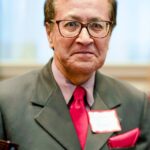
Dr. Shyam Karki: Reputed Clinician and Social Hero from Baltimore
Discipline is more important than the desire to succeed in life. Shyam D. Karki is an exceptional human being who has invested much of his time, discipline, and effort into his work to rise as one of the most successful names in the pharmaceutical field.
Shayam D. Karki received his Bachelor of Pharmacy from American University of Beirut, Lebanon; his Master of Arts in economics from Tribhuvan University, Kathmandu, Nepal; and his PharmD from the School of Pharmacy, University at Buffalo, State University of New York. He was certified as a geriatric pharmacist by the Commission for Certification in Geriatric Pharmacy and received a Management Training Certificate from the Department of Administration of HMG NEPAL. Moreover, he was certified in anticoagulation therapy management from Indiana University.
Karki served as the pharmacy department director at Adventist Rehabilitation Hospital of Maryland and Adventist Behavioral Wellness Services, Rockville, MD, from 2015 to 2017. He was an onsite clinical pharmacist at Levindale Geriatric Hospital, Baltimore, MD, from 2014 to 2015. Before that, he was the pharmacy department director at the Specialty Hospital of Washington, DC, Capitol Hill, from 2011 to 2014.
In addition to serving at different hospitals in managing and directing roles, Karki has made significant contributions in pushing the boundaries of human knowledge through his research activities. He has presented more than fifty posters at the annual meetings of professional societies and published more than twenty-five research papers in professional peer-reviewed journals. He has been an abstract reviewer for ACCP, ASCP, and ISPOR. He has made more than one hundred presentations on issues relating to pharmacotherapy and pharmacoeconomics to a different pharmacy, nursing, and medical organizations and more than three hundred routine presentations (weekly forty-five-minute programs) on medications to the pharmacy and medical students, medical residents, and geriatric fellows at hospitals.
Karki is an adjunct associate professor at the School of Pharmacy, Howard University, Washington, DC. He is a preceptor at the School of Pharmacy, University of Maryland, Eastern Shore. He was the chairman of the Performance Evaluation Committee, Pharm-Health Infusion Inc, Rochester, NY, from 1993 to 1997. He served as the Geriatric Pharmacy Consultant at the Jewish Home of Rochester, NY, from 1995 to 2004. He was the coordinator of clinical research & education at Unity Health System, Rochester, NY, from 1995 to 1999. He is the founder and life member of the Nepal Pharmaceutical Association (NPA).
Mr. Karki has been honored with multiple awards to acknowledge his contributions to society. He is the recipient of the Roerig Pharmacy Award for excellence in research in drug use in long-term care facilities in 1993, provided by the New York Council of Hospital Pharmacists. He was elected to a fellowship at the American College of Clinical Pharmacy in 2000. He was presented with a Recognition Award for professional achievement. He sustained service to Nepali and Nepali communities in North America by His Majesty the King Gyanendra Bir Bikram Shah Dev, Kathmandu, Nepal, on October 2003. Though the awards are prestigious, the biggest honor for this great figure is the gratefulness for all the lives he has touched

Dr. Pradip Dhital: Legendry Intellectual from New York
Dr. Pradip Dhital is currently living in New York and is a renowned figure among Nepalese in America. He served in five different government hospitals in Nepal before moving abroad.
Born in Kharibot, Bhangyang, Gorkha, in 1946, he belonged to a well-off family and was raised in Kshetrapati in Kathmandu. He is also the founding member and former president of the Association of Nepalese in Midwest America. He headed to England in 1979 before moving to the US in 1982.
Dr. Dhital lived in a joint family, and his parents were financially strong and high-ranking government officials—badahakim (governors)—in Bhairahawa. His childhood was spent among Muslim friends playing and running in Tundikhel, Indrachowk, and Kathmandu. He studied at the JP School, got his SLC in 1959, and completed his BSc from Tri-Chandra College in 1965 before heading to Kolkata for medical studies.
He studied for his MBBS at Kolkata University and returned to Nepal in 1972, where he was placed with a job at Bir Hospital. After a few months of service in Bir Hospital, he was transferred to Koshi Zonal Hospital, where he worked from 1972 to 1974. He later served at Trishuli Hospital in 1974 and 1975 before he was again appointed to Bir Hospital from 1977 to 1979.
He got an opportunity for further studies and left for England in 1979, working as a house physician and living there for three years. He also sat for the ECFMG exam in 1980, wanting to enter the United States. He called his family, wife, and two children after entering the US in 1982.
Dr. Dhital struggled a lot during his initial days in the US before he changed his subject to pathology and got his degree after four years of study. He joined Saginaw Hospital in Michigan in 1986, worked at the Flint Teaching Hospital in Michigan from 1987 to 1992, and later joined the teaching hospital in Detroit from 1992 to 2003. He moved to Saginaw Hospital, Michigan, from 2003 to 2009 and worked for CVX Laboratory in New York from 2009 to 2011. He has served in the North Shore Long Island Jewish Hospital, Long Island, New York, since 2011.
Besides Dr. Dhital’s service in the health sector, he has been involved in social service for nearly four decades. He was the founding member of the Association of Nepalese in Midwest America in 1982 and became president from 2003 to 2004. He was also the founding member of the Association of Nepalese in America (1982). He was a fellow at the American Society of Clinical Pathology and College of American Pathology, and a member of the Association of the Nepali Physicians in America.

Dr. Deepak Shimkhada: Highly Decorated Scholar from California.
Dr. Deepak Shimkhada has impeccable academic credentials. He was born in Nepal and trained in Nepal, India, and the United States of America. After earning a B.F.A. degree in painting, and an M.A. in art criticism from the University of Baroda, India, Dr. Shimkhada was awarded a Fulbright fellowship to pursue post-graduate studies in art history in the U.S. Dr. Shimkhada’s academic disciplines span a wide gamut, from painting to art criticism, and from art history to education, and to religion. As a result, he has happily married all those disciplines, as his publications and teaching careers demonstrate. Highly decorated and well-respected in his respective fields, Dr. Shimkhada is a sought-after expert in South Asian art, culture, and religion. He has been a regular guest on History Channel’s popular show Ancient Aliens and Australia’s 72 Dangerous Animals— Asia. Additionally, B.B.C. Radio-London has interviewed him for its Natural History Series.
Dr. Shimkhada has an excellent academic background: Ph.D. Claremont Graduate University, California, 2001; M.A. University of Southern California, California, 1975; M.F.A. University of Baroda, India, 1971; B.F.A. University of Baroda, India, 1968. The well-reputed scholar has obtained a number of grants and fellowships such as the 2018 Chaffey Foundation Grant, Chaffey College, 2008 T.R.C. Mini-Grant, 2007 Irvine Diversity Grant, 2006 T.R.C. Mini-Grant, 2005 Irvine Diversity Grant, 2005 Fitness Grant, 2004 Irvine Diversity Grant, 2003 Fitness Grant, 1989 Council of South Asia Grant, Association for Asian Studies, 1985 Research Grant, Buddhist Association of North America, 1980 Graduate Students Alumni Research Award, Ohio State University, 1978-1979 Junior Research Fellowship, American Institute of Indian Studies, 1974-1977 Tuition Fellowship, University of Chicago, 1972-1974 Fulbright Fellow, U.S. Department of State, 1968-1970 Senior Cultural Fellow, Government of India, 1962-1968 Junior Cultural Fellow, Government of India.
Due to his extraordinary contribution to the field, he has been awarded with several prestigious awards, recognition, and citations: the 2016 Fisher-Adjunct Faculty Award for Excellence in Teaching, Claremont School of Theology, 2008 Distinguished Alumni Service Award, presented by the President of Claremont Graduate University, during its 81st Commencement Ceremony, May 17, 1970, Mention for best entry in painting category from Nepal, in the Triennale of World Contemporary Art, India, 1969 Certificate Award in painting, during the annual juried exhibition of paintings and graphics by Nepal Association of Fine Arts, Kathmandu.
As head of the Himalayan Arts Council, Indic Foundation, Asian Studies on the Pacific Coast, and South Asian Studies Association, Dr. Shimkhada has organized several conferences and seminars. He has presented papers and chaired panels at many of them.
He has served on various professional, national, and international organizations as an office bearer. For example, he was the founding President of the Himalayan Arts Council at the Pacific Asia Museum in Pasadena, California; Asian Studies on the Pacific Coast; Indic Foundation; and the South Asian Studies Association. He also curated exhibitions at Pacific Asia Museum; Palos Verdes Art Center; Montgomery Art Gallery, Pomona College; and the Humanities Art Museum, Scripps College.
As an artist, Dr. Shimkhada has exhibited his artworks nationally and internationally. His last one-person show of paintings and graphics was held in Chicago in 1977. He is also the recipient of several national awards and mentions in painting. His works have been sold to many connoisseurs in Asia, Europe, America, and Mexico.
Dr. Shimkhada is the author of Nepal: Nostalgia and Modernity, Marg Publishers, Mumbai, 2011;
The Constant and Changing Faces of the Goddess— Goddess Traditions of Asia (Deepak Shimkhada and Phyllis K. Herman edited), Cambridge Scholars Press, Cambridge, England, 2008;
The Himalayas at the Crossroads: Portrait of a Changing World (edited), Pacific Asia Museum:
Pasadena, California, 1987; Popular Buddhist Mantras in Sanskrit (co-authored with Shih Pei Lai, Mahayana Vihara Press: Taipei), 1985.
Additionally, numerous papers in art journals and several book chapters have been published. He is the author of several edited books, published both in the U.S. and Europe.

Kanhaiya Lal Kayastha: Veteran Engineer from Los Angeles
Kanhaiya Lal Kayastha worked for the Nepal government from 1960 to 1965 and then joined private practices before coming to the US in April 1977. He has designed and supervised many private and government buildings in and out of Kathmandu, including USAID projects. His first appointment was made by the great leader, the late Ganesh Man Singh when he was the public works minister. He completed the installation of twenty-three drinking water taps in Sankhu village, east of Kathmandu, in 1961, under direct observance of the local leader, Late Hon. Minister Jog Meher Shrestha.
Before 1950, the transportation of all essential goods for Kathmandu Valley was either by porters or through the ropeway-trolley system. Mr. Kayastha’s father was deputed to Dhorsing/Bhimfedi station—the starting point of the ropeway system—and Matatirtha in Kathmandu was the last station. During his early years, Mr. Kayastha’s father taught him at home. He was later admitted to the Juddhodaya Public School, located in a series of abandoned horse stables near New Road, Kathmandu.
In 1974, Mr. Kayastha first visited the USA to attend the AIIE Conference in New Orleans, representing the Nepal Engineers’ Association. In 1977, he returned to join Cal’s Masters in Engineering program. State University, Northridge (1977–1979). He prepared a Structural Building Code for Nepal Project under the guidance of advisor Dr. Roger Di. Julio Jr. In December 1983, he got to hand over a copy of the project to His Majesty King Birendra of Nepal at the Los Angeles World Affairs Council state visit. Nepal enacted a building code in 1994.
In 1981, Mr. Kayastha joined the City of Long Beach after working in a few private engineering offices. He retired from the city’s Planning and Building Department in 2004 as a senior structural engineer. He oversaw the city’s Unreinforced Masonry Retrofit Program and retrofitted more than six hundred existing buildings in the city. He was instrumental in reviewing unique and complex structural projects, including high-rise, residential/commercial, and waterfront structures. He took a lead role in the Los Angeles Regional Uniform Code Program as a member of the ICBO, LA Basin Chapter. He prepared a Manual of Standard Designs Criteria for Public Works construction in 1984.
Mr. Kayastha holds an ME (structure) degree; California state licenses PE (civil), SE (structure), and CA Architect; and ICC Plans Examiner and Building Inspector Certificates and is a Fellow (life) ASCE, Fellow (life) ASNEngr, SE Member SEAOSC (life), and Member SECB. He was a subject specialist for grading the California SE license exams for the Department of Consumer Affairs, State of California.
Mr. Kayastha has written many articles in the field, including, “Earthquake Retrofitting of Schools and Hospitals in Nepal,” ANA, LA, 2007; “Role of Structural Engineers to Create Earthquake-Resistant Buildings and Infrastructure in Nepal,” NRN, Texas, 2010, Nepalnews.com, June 8, 2010; “Earthquake Preparedness and Disaster Relief in Nepal,” NRNA, Kathmandu, October 2011; “Workshop on Consequences of 2015 Nepal Earthquake & Integrated Post-Disaster Management,” (one session chair), Kathmandu, October 2015.
He received the Customer Service Award in 1994, the Supervisors Leadership Institute Certificate from the city manager, a Recognition Certificate from the mayor of the city of Long Beach in 2004, a Lifetime Achievement Award in 2012, and Community Volunteer awards in 2010 and 2013.
Mr. Kayastha served as the president of the America-Nepal Society of California in 1987. He was a founding advisor/donor and Nepali interior temple design architect for Shree Pashupatinath and Buddha Mandir, Norwalk, California. Kayastha resides in La Habra, California. He is married and has three children and four grandchildren.

Dr. Shobha Hamal: Expert on Women and Gender Issue from Uta
Shobha Hamal Gurung is the associate professor of sociology and women and gender studies at Southern Utah University (SUU) and the program director of SUU’s Nepal studies program. Her research focus is gender and labor; globalization, migration, and transnational studies; South Asia and inter-
national studies; and social justice and human rights. Her broad expertise on the lives of Nepali women is reflected in these publications: “Women Weavers in Nepal: Between Global Market and Local Craft Production” (2004); “Growing Up Hindu: Mapping the Memories of a Nepali Woman
in the United States” (2008); “Nepali Female Migrants and Informalization of Domestic and Care Work: Service or Servitude?” (2010); “Gendered Labor: Experiences of Nepali Women within Pan-Ethnic Informal Labor Markets in Boston and New York” (coauthor, Bandana Purkayastha, 2013);
“Sex Trafficking and the Sex Trade Industry: The Processes and Experiences of Nepali Women”(2014); “Shifting Gender Roles and Shifting Power Relations: Immigrant/Migrant Nepali Families in New York and Los Angeles” (2014); “Fluidity and Realities of Race, Class, and Gender: Different Places, Times, and Contexts” (2014); and “Dynamics and Ramifications of US Immigration and Visa Policies: Nepali Transnational Workers, Families, and Children in the United States” (2015). Her book Nepali Migrant Women: Resistance and Survival in America found its home at Syracuse University Press, which is highly regarded for its Gender and Globalization Series. This book is a pioneer in documenting the gendered experiences of educated and professional migrant women who work in ethnically segmented labor markets in Boston and New York.
She has presented her scholarly work at a number of regional, national, and international conferences, which include the Eastern Sociological Association, Pacific Sociological Association, American Sociological Association, International Sociological Association, Sociologists for Women in Society, UN Commission on the Status of Women (CSW 58), International Sociological Association, and SUU (Festival of Excellence). She has been invited to speak in the US (at Boston College, the University of Connecticut, the University of Illinois, the University of Massachusetts, the University of Nevada, the University of Washington, the University of Wisconsin, and Southern Utah University) and in Nepal (Kathmandu University, Padma Kanya College). She has received funding from the Institute for Asian American Studies at UMass Boston and the Ford Foundation to further her current research “Invisible Migrants in a Globalized Economy: The Case of Nepali Women in the US.” Her current research project examines the socio-cultural and emotional lives of Bhutanese refugees of Nepali origin in two US cities—Salt Lake and Seattle.

Dr. Chandra Prakash Chataut: Well-Renowned Clinician from Chicago
A medical doctor by profession, Dr. Chataut lives multi-dimensional life at the same time.
Born in the Dadeldhura District of the Mahakali Zone, Nepal, Dr. Chataut completed his formal education at Ananda Kuti High School, Kathmandu, and his Intermediate in Science (ISc), from a prestigious government college, Amrit Science Campus, Kathmandu. Then he achieved a Bachelor of Medicine and Surgery (MB BS) degree from Sir Salimullah Medical College, Dhaka, Bangladesh, in 1987. He earned an MD with a Residency in Internal Medicine and Nephrology from the Institute of Postgrad Med & Research, Dhaka, Bangladesh, in 1995.
As a medical doctor, he served the motherland, saving lives in a country where most people do not have access to health services. Dr. Chataut worked consecutively at two leading government hospitals in Kathmandu: TU Teaching Hospital and Bir Hospital.
He moved to the USA in 1998 and began his residency in internal medicine at Cook County Hospital, Chicago, in 2001. Dr. Chataut’s yearning for higher education led him to earn another degree in the USA, an MS in clinical research from Rush University, Chicago, in 2008.
Since then, he has been working as an assistant professor of medicine at Rush University, Chicago, IL, and is an active member of the American College of Physicians (ACP).
Dr. Chataut completed an Authentic Leadership Development course conducted by the American Association for Physician Leadership, Scottsdale, Arizona, in 2015. He also trained with the Ward Attending Scholars Program (WASP), a multimodal, collaborative faculty development program for teaching attending physicians at Stroger Hospital, Department of Medicine, Chicago, in 2014. He participated in workshops on student teaching at Rush University, Chicago, IL.
Since July 2017, Dr. Chataut has worked as a doctor and lecturer. He has been the attending hospitalist at the Division of Hospital Medicine (DHM), Stroger Hospital of Cook County, Chicago. His work includes supervising and teaching resident physicians in the Internal Medicine Ward and Medicine Consult Service and supervising and teaching third- and fourth-year medical students in a medicine inpatient rotation.
Previously, he worked as a general internist at the Division of General Internal Medicine, Stroger Hospital, Chicago. There he was responsible for providing direct patient care with dignified professionalism in primary care, urgent care, and the medicine consult clinic from November 2001 to July 2014. During the job, he attended the Physician for Inpatient Medicine Ward and Medicine Consult Service and supervised resident physicians and students.
He also has been working as a resident physician lecturer during ward rotation and medical consult rotation and conducted clinical workshops for resident physicians at the General Medicine Clinic (GMC).
He received a dozen awards and grants for the extraordinary task he fulfilled, including the Department of Medicine Student Education Award from John H. Stroger Jr. Hospital of Cook County, Chicago, in two consecutive years, as well as others.
Despite all his responsibility, Dr. Chataut proved himself as a successful administrator and published several research papers, as well as managed to make time for community service. He is the founding board member of Nirogi Nepal, an online portal aimed at health literacy; a life member and board member of the America Nepal Medical Foundation since 2017; and an active participant in earthquake relief in Nepal, participating in medical camps and public health projects in earthquake-affected villages in Nepal in June 2015.
In 2015 he conducted health information awareness workshops for the Nepalese community in collaboration with the Non-Resident Nepali Association, Chicago. He has provided health education services to the Nepalese and Bangladeshi communities in the Chicagoland area since 1998.
Dr. Chataut is a multidimensional person who walks different lives simultaneously.

Dr. Binod Shah: Well-decorated Medical Personality in New York
From traveling on horses to launching a spacecraft to Mars, innovation has always been the best friend of mankind. Dr. Binod Shah, an innovator by heart and profession, is a legend in medicine. Dr. Shah has not only developed a US-patent-approved safety cannula but has also made a Great Britain-patent-approved pneumatic limb exsanguination device. He also has a patent pending on a drug disposal system and a universal urine collection system in the US patent and trademark office.
He received his Bachelor of Medicine and Surgery (MBBS) from the University of Dhaka, Bangladesh, in 1988, where he was awarded a full scholarship. While studying in Bangladesh, he also worked for Radio Bangladesh and was awarded the Young Surgeon Award.
Dr. Shah completed his diploma in orthopedics from the Rehabilitation Institute & Hospital for the Disabled, Dhaka, Bangladesh, in 1993 and bagged the certificate for Health Care in Developing Countries from Boston Univ. School of Public Health, Boston, in 1994.
He was a clinical research fellow with the Department of Orthopedic Surgery at Boston Medical center, Boston University, from 1994 to 1997 and 1998 to 1999; started an internship at the Long Island Jewish Medical Center, NY, in 1997; and completed his residency in physical medicine and rehabilitation in 2002.
He completed his fellowship in pain medicine in 2003 from New York Medical College, Westchester Medical Center, NY, and was board certified in physical medicine rehabilitation and pain medicine from the American Board of Physical Medicine and Rehabilitation (ABPMR) and American Board of Pain Medicine in 2003.
Moreover, Mr. Shah is an assistant professor at the Department of Rehabilitation Medicine, Montefiore Medical Center, Bronx, NY. He worked as the program director at the Pain Medicine Fellowship Program Department of Rehabilitation Medicine from 2010 to 2013, served as the director of the Interventional Spine Program there from 2004 to 2008, was the staff physiatrist/pain management specialist at Interlake Orthopedics, Geneva, NY, from 2003 to 2004, and received a pain medicine fellowship from the Westchester Medical Center, Valhalla, New York, in 2003. Moreover, he is a developer of the computer applications Controlled Drug Rx Monitor and My Pain Logs, an interactive pain diary for pain patients and physicians.
.He worked as the physician in charge at the Primary Health Care Center, Janakpur Dham, Nepal, from 1993 to 1994 and served as the orthopedic surgeon at Janakpur Zonal Hospital, Janakpur.
Furthermore, Mr. Shah is a diplomat, as approved by the American Board of Pain Medicine in 2003. He was certified in the pain medicine subspecialty by the American Board of Physical Medicine and Rehabilitation in 2003 and recertified in 2013. He received his New York State Medical License in 2001 and has been an active member of the American Medical Association since 1999 and the Association of Academic Physiatrists since 2000. In 2002, he joined the American Academy of Physical Medicine and Rehabilitation. Mr. Shah has made seven publications and five presentations about his work worldwide. His major publications include “Current Therapeutic Options for Chronic Low Back Pain: A Focus on Nonsurgical Approaches” and “Resolution of Painless Foot Drop in Lumbar Radiculopathy.” His poster presentation on “Surgical Evaluation of the Ankle for Intra-Articular Debris” during the 5th meeting of the International Society of Fracture Repair in Canada was well praised. In 2001, he presented on “Ipsilateral Hemiplegia (Kernohan-Woltman notch phenomenon) Caused by Oral Anticoagulant Therapy” at Hilton Head, SC.
Recently he was selected as the number three pain doctor by Yonkers, New York.
Mr. Shah is an excellent social servant who announced he had founded a charity for the education of deprived girls in Nepal under his daughter, Elish Radhika Shah. He served as a member of the NRNA ICC for two terms and as the president of the America Nepal Friendship Society, the Association of Nepali Teraian in America. He was a board member of the America Nepal Medical Foundation and the Madheshi Association in America.

Kiran #2 #2 #6
I have always enjoyed the method and thinking that goes into excellent writing. I desperately wanted to write an inspiring story ever since I was a child. My aspeirations drove me to journalism which became my identity and profession in 2002.
Kiran #2 #2 #7
I have always enjoyed the method and thinking that goes into excellent writing. I desperately wanted to write an inspiring story ever since I was a child. My aspeirations drove me to journalism which became my identity and profession in 2002.
Kiran #2 #2 #8
I have always enjoyed the method and thinking that goes into excellent writing. I desperately wanted to write an inspiring story ever since I was a child. My aspeirations drove me to journalism which became my identity and profession in 2002.
 HEAD OFFICE